
The Worry Toolkit
Intelligent Living
AUTHOR: SMRITI VINOTH
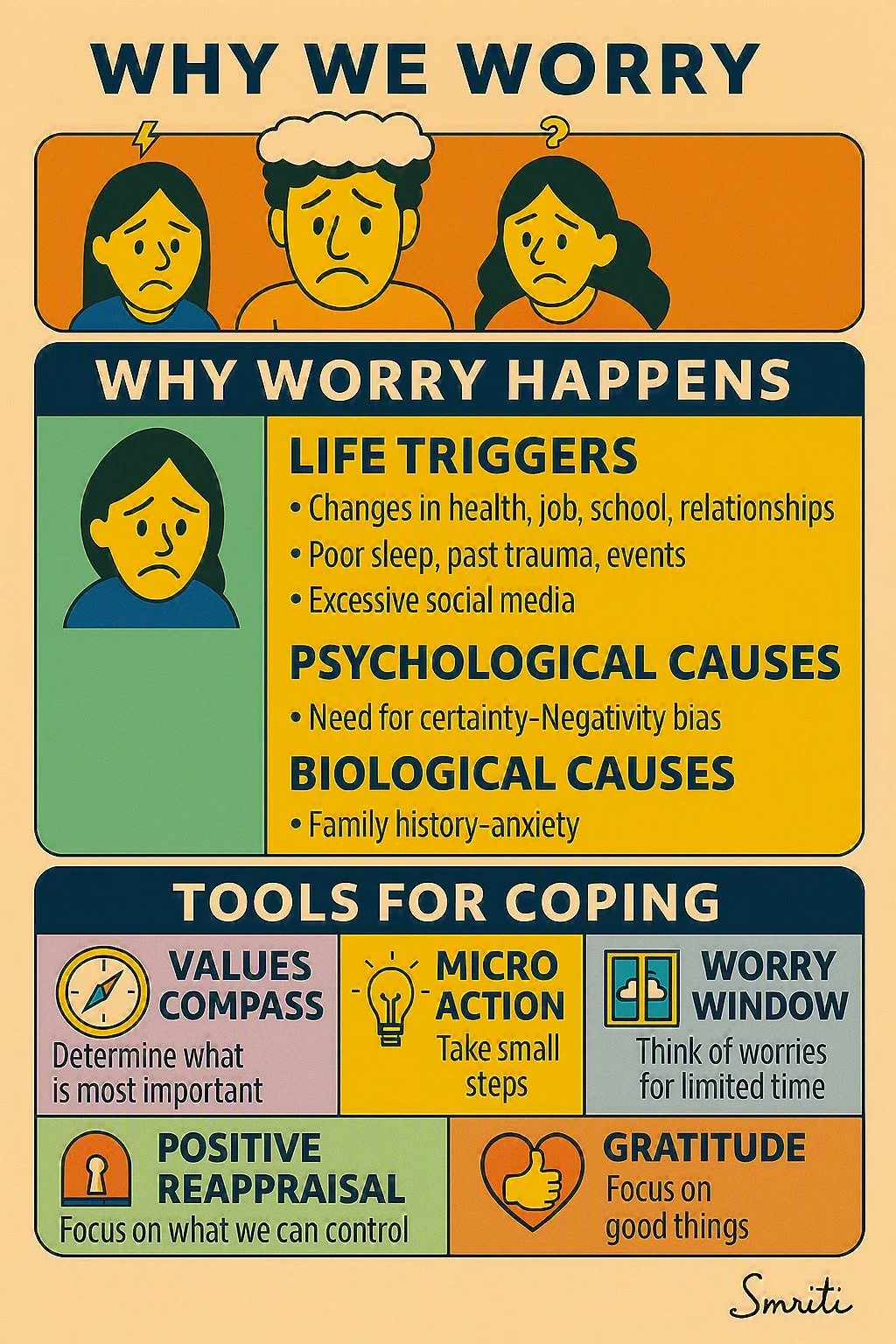
Worry happens because we care!
Worry can be a catalyst for change. But when left unchecked, it can be paralyzing. Carry this toolkit to spin out of that downward spiral of overthinking!

Tools for a Balanced Mind
By transforming uncertainty into an opportunity for growth, this guide empowers readers of all ages to move past mental pressure and step forward with quiet confidence and resilience.
Everybody worries, no matter their age. Worry may come up when we think about school, friends, family, or the future. Sometimes a worry can be a small passing thought, but it can also feel big and impossible to ignore. Even though worrying is uncomfortable, it can teach us important things about what matters to us and what we need. Learning why we worry is the first step toward managing our anxiety in a healthier way.
One reason we worry is that life can feel uncertain; other times, we feel trapped inside our own heads, replaying those uncertainties over and over. When we don't know what is going to happen, our minds naturally jump to the worst-case scenario. These feelings can be made worse by school stress, grades, time management, and relationship struggles. Many students also fear being judged, feeling like they are not good enough, or failing to measure up. These worries build up pressure and leave us feeling weighed down.
To cope with these worries, we can use simple "mental shortcuts" to identify exactly what kind of anxiety we are dealing with. For example, if a worry stems from something we care deeply about, we can use a "Values Compass" to clarify what matters most to us. If the worry involves negative thinking or catastrophizing, we can use "Positive Reappraisal" to view the situation in a more balanced way. When we feel stuck and unable to act, a "Micro-Action" can help us take one small step forward. And if our minds keep recycling the same thoughts, a "Worry Window" can help us contain those thoughts instead of letting them take over. These tools empower us to respond constructively rather than destructively.
Positive Reappraisal is particularly helpful because it involves viewing a stressful situation in a more positive light. Instead of assuming everything is awful, we can learn to focus on what we can control and on what will eventually pass. This process involves naming the worry, recognizing negative thoughts, and choosing a "power thought" to keep us calm and confident.
Gratitude is another useful tool. When we worry, our attention narrows and we see only what is going wrong. Gratitude widens our perspective to include what is still going well in our lives. For example, if we are stressed about school, we can remind ourselves of the teachers or friends who support us during tough times. Holding space for both worry and gratitude at the same time helps us feel more balanced.
The Values Compass is equally powerful. Sometimes we worry because we deeply value a certain outcome, but we forget to connect with that underlying value. For instance, if you worry about getting good grades, the root value may be a desire to learn and succeed. By shifting your focus to truly understanding the material, good grades will naturally follow. When we recognize the value behind the worry, we can take small, meaningful steps in a positive direction.
In conclusion, worry is a natural part of life, but it does not have to consume us. When we understand where our worries come from and use tools like Positive Reappraisal, Gratitude, and the Values Compass, we can turn anxiety into something useful. Worry may never disappear completely, but with the right strategies, we can face it with confidence and strength.