Intermittent Fasting
health and wellness
Author: Gayathri Sathiamoorthy
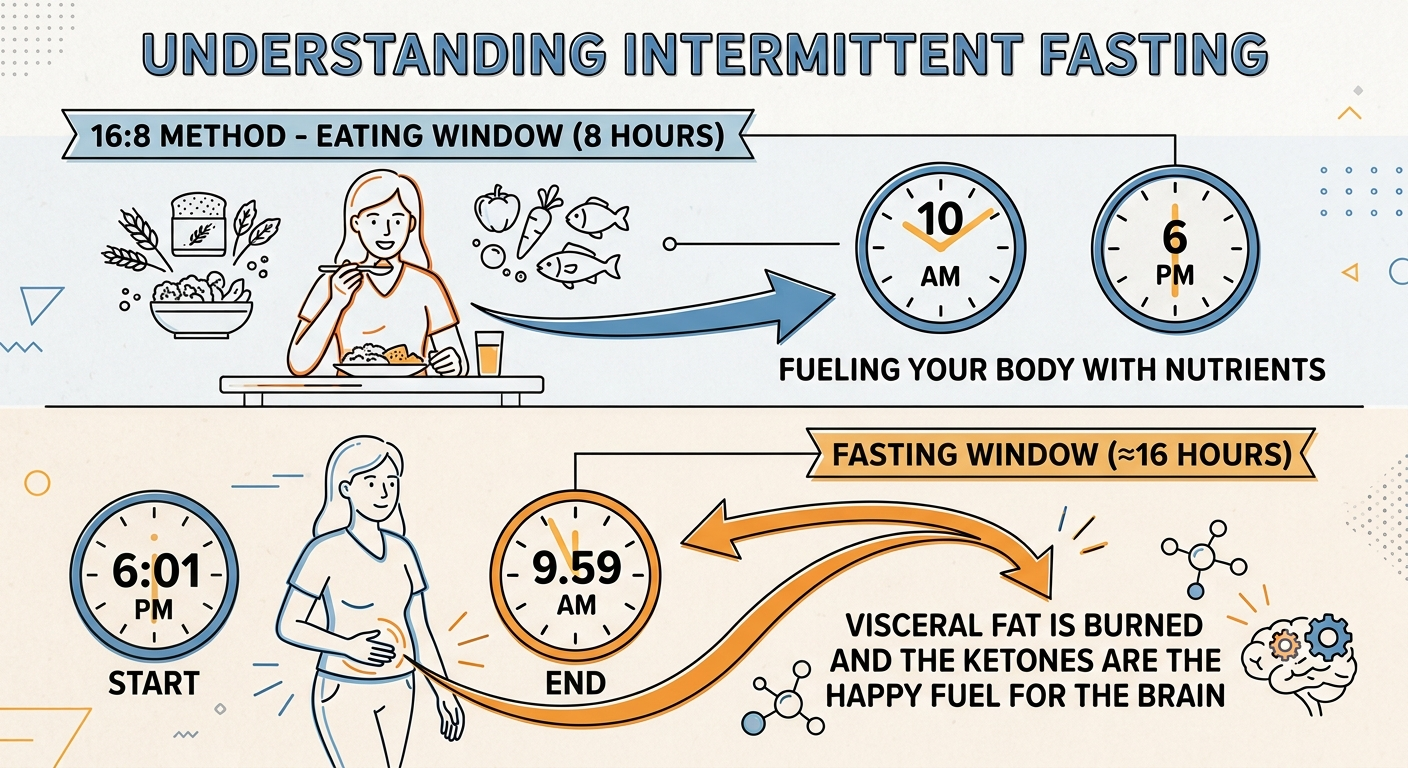
The 16:8 Blueprint: From Fasting to Brain Fuel
Introduction
“Health is wealth” is a well-known adage that highlights the importance of maintaining good health for a fulfilling life. In today’s world, people constantly strive to improve their health by consuming nutritious foods, exercising regularly, and following healthy lifestyles. However, one important practice that is often overlooked is fasting, or what may more appropriately be called “time-restricted feeding.”
At first glance, choosing not to eat may seem unhealthy or even counterintuitive. Yet, scientific understanding of human physiology has revealed that controlled fasting can provide numerous health benefits. From improving metabolism and reducing inflammation to supporting brain function and gut health, fasting has emerged as a powerful natural tool for overall wellness.
To understand the benefits of fasting, it is important to first understand how the body stores and uses energy.
Understanding Fat Storage and Insulin
Consider a situation where we consume a large feast — medically speaking, more food than the body immediately requires. The human body is designed for survival and is remarkably intelligent. Whenever excess calories are consumed, the body stores the unused energy in the form of fat for future use, anticipating periods when food may not be available.
Over time, repeated overeating and constant access to food lead to the accumulation of visceral fat. Visceral fat is stored deep within the abdominal cavity and surrounds vital organs such as the liver, pancreas, and intestines. Unlike subcutaneous fat, which lies beneath the skin, visceral fat is metabolically active and potentially harmful because it releases inflammatory chemicals that can damage organs and contribute to disease.
Many people attempt to lose weight through exercise and gym memberships yet often struggle to see significant results. One important reason is the lack of understanding of the hormonal processes involved in fat storage and fat burning.
Whenever food is consumed, especially foods rich in sugars and processed carbohydrates, the pancreas releases a hormone called insulin. The primary role of insulin is to regulate blood sugar and store excess calories as fat for future energy needs.
As long as insulin levels remain elevated, the body remains in “fat-storage mode,” preventing stored fat from being efficiently used as energy. For fat burning to begin, insulin levels must decrease significantly. However, in modern eating patterns, meals are frequently interrupted by snacks, causing insulin levels to remain constantly elevated throughout the day.
This persistent elevation of insulin is known as insulin resistance, a condition associated with obesity, diabetes, fatty liver disease, and several metabolic disorders.
The Role of Cortisol
Cortisol is a hormone released by the adrenal glands in response to physical and psychological stress. While cortisol plays an important role in helping the body adapt to stress, chronically elevated cortisol levels have been associated with increased appetite, changes in metabolism, insulin resistance, and the accumulation of visceral fat. Research suggests that prolonged stress and increased cortisol exposure may contribute to abdominal obesity and other features of metabolic syndrome. Therefore, stress management, adequate sleep, and healthy lifestyle habits are important complements to fasting and other strategies aimed at improving metabolic health
Ketogenesis: The Fat-Burning Process
When insulin and cortisol levels are sufficiently low, the body undergoes an important metabolic transition called ketogenesis. Initially, during fasting, the body uses glucose stored in the liver for energy. Once these reserves are depleted and food intake still does not occur, the liver begins breaking down visceral fat to produce energy. During this process, substances called ketones are released, and the body enters a fat-burning state known as ketosis or ketogenesis.
Ketones provide a clean and efficient source of energy for the body.
Fasting vs. Calorie Restriction
A common question is whether simply reducing calorie intake is equivalent to fasting. Although both approaches may reduce body weight, they affect the body differently.
Studies comparing fasting with frequent low-calorie meals have shown that fasting helps preserve muscle mass more effectively. Calorie restriction without fasting may result in the loss of muscle tissue, whereas fasting primarily encourages the body to utilize stored fat for energy. Thus, fasting represents a distinct metabolic process rather than merely a reduction in calorie consumption.