HEALTH AND WELLNESS
AUTHOR - SAIDHARSHANA DHANTU
Picture Illustration: Smriti Vinoth and Mahati Vinoth
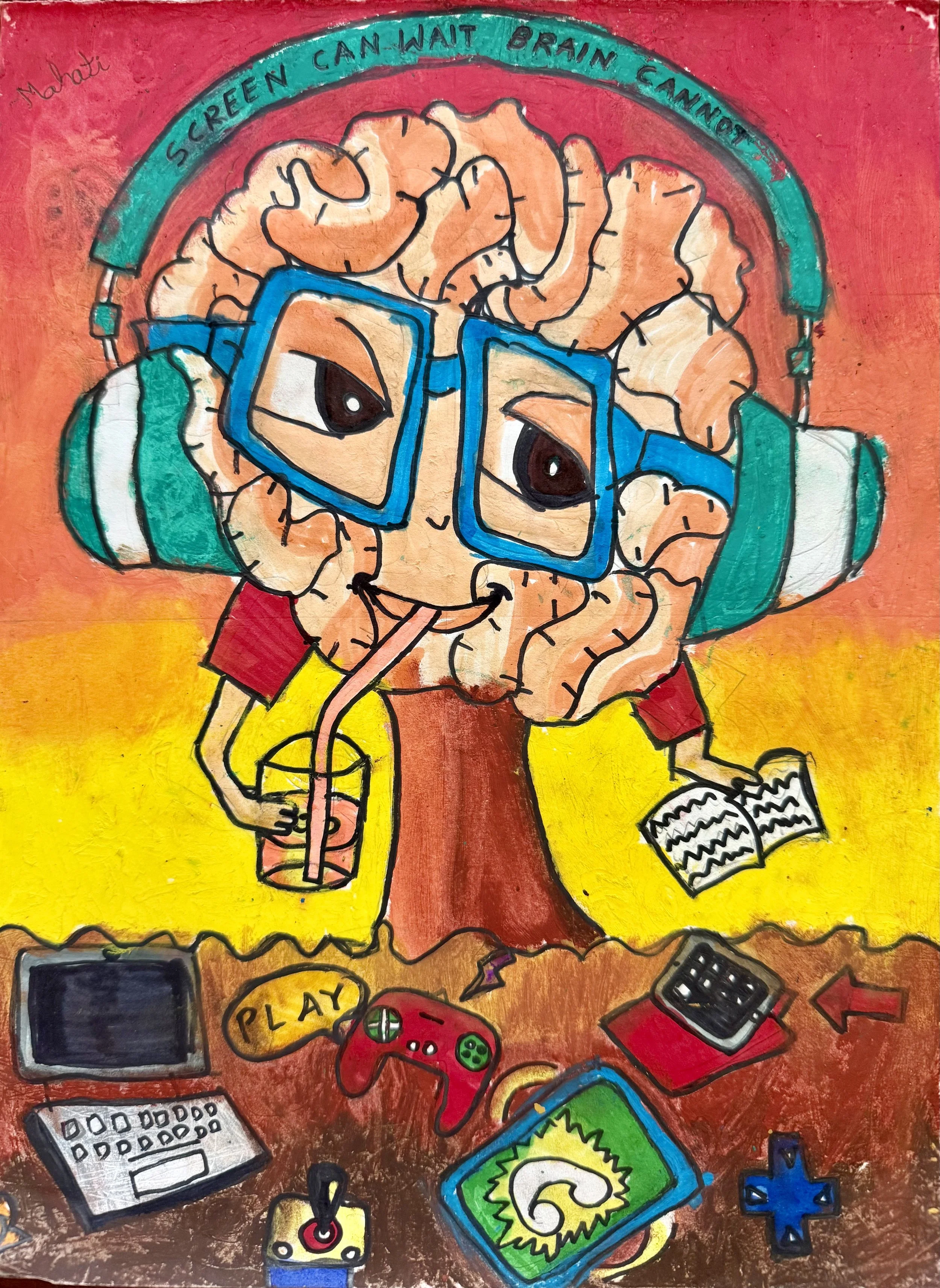
Screen Can Wait, Brain Cannot! Eat colorful foods to make your brain strong. Turn-off your ipad, phone ,TV and go play in the sun or have fun with some music with your friends to make your brain feel good. Illustration and note : Mahati Vinoth, Age 7We’ve all experienced that post-scroll exhaustion: your mind feels foggy, restless, and strangely drained after hours of consuming digital content. While the term “brain rot” has become a popular term online, it describes a very real state of mental overload and emotional dulling caused by constant exposure to fast-paced, low-effort stimulation (as described in a 2024 review in Brain Sciences).
Most of us don’t even notice when it happens. We just feel oddly tired, even though we’ve “done nothing.” Homework feels heavier. Reading feels harder. Our minds feel like they are jumping but never landing anywhere. For those whose brains are still developing, this constant noise is more than just a distraction. In fact, it interferes with building essential skills like memory, planning, and emotional regulation.
In a world that demands constant engagement, boredom is often treated like the enemy. We define it as that uncomfortable restlessness where we want to do something meaningful but don’t know where to start. Naturally, we reach for our phones to fill the gap.
The Brain Sciences review points out that many of the habits driving “brain rot” have names. This includes doomscrolling, zombie scrolling, and compulsive social media use. These behaviors keep the brain in a constant reactive state, never giving it time to reflect or integrate what it has taken in. The problem isn’t just the screen. It's the pattern of endless, passive consumption.
What makes these habits so hard to break is that they’re reinforced by dopamine-driven feedback loops. Every swipe promises something new, whether it’s a funny clip, or a like. Algorithms are designed to keep us engaged by delivering tiny bursts of reward. Over time, the brain learns to crave constant novelty and begins to resist anything slower like reading, studying, or simply sitting still.
However, when you finally stop the stimulation, something powerful happens: your brain switches into its natural “default mode”, the part that daydreams, reflects, and connects ideas. Neuroscientists call this the default mode network, and it’s the same system that lights up when your mind wanders during a warm shower or a quiet walk. That’s why your best ideas often “click” in those moments.
Psychology research backs this up as well. A classic study on boredom and creativity found that people who did simple, boring tasks came up with more creative ideas afterward (Mann & Cadman, 2014). More recent brain-imaging studies show that free mind-wandering is linked to creative thinking and novel connections.
In other words, boredom isn’t empty time. It’s when the brain finally gets to work in the background. When stimulation drops, the mind begins sorting, replaying, and reorganizing what it has already absorbed. Neuroscientists have also observed that during quiet rest, the brain strengthens new memories by “replaying” recent experiences (Schapiro et al., 2018).
This is why ideas often arrive when you’re doing nothing such as lying in your bed, staring out a window, and walking without headphones. Your brain is no longer reacting. It’s integrating. When we, instead, fill every “in between” moment with a screen, we train our brains to expect constant novelty. Over time, this habit leads to:
- Reduced Focus: The brain becomes used to constant switching.
- Shallow Thinking: Ideas never get time to sink in.
- Lower Creativity: Without idle moments, the mind can’t recombine old ideas into something new.
How can we reclaim our focus? Boredom can be used as a daily vitamin for your mind. Some of these tips may help:
1. The Five-Minute Challenge: Try five minutes a day to do absolutely nothing. This means no music, no multitasking, no phone.
2. Honor the “Gaps”: When waiting for a ride or walking somewhere familiar, resist the urge to scroll.
3. Schedule Blank Minutes: Set aside 5–10 minutes to sit and stare out a window, letting your thoughts go wherever they want.
4. Protect Your Concentration: Turn off notifications during study/work blocks so your attention can settle.
“Brain rot” is what happens when a mind is constantly “on” but never allowed to process. Boredom is the antidote. By choosing to embrace quietness, you give your brain the room it needs to strengthen memory, restore attention, and spark new ideas. Sometimes, the most productive thing you can do for your mental health is absolutely nothing. Put the phone down. Sit for five minutes. Let your mind wander. That quiet space might be where your best ideas, and your strongest self, begin to flourish.
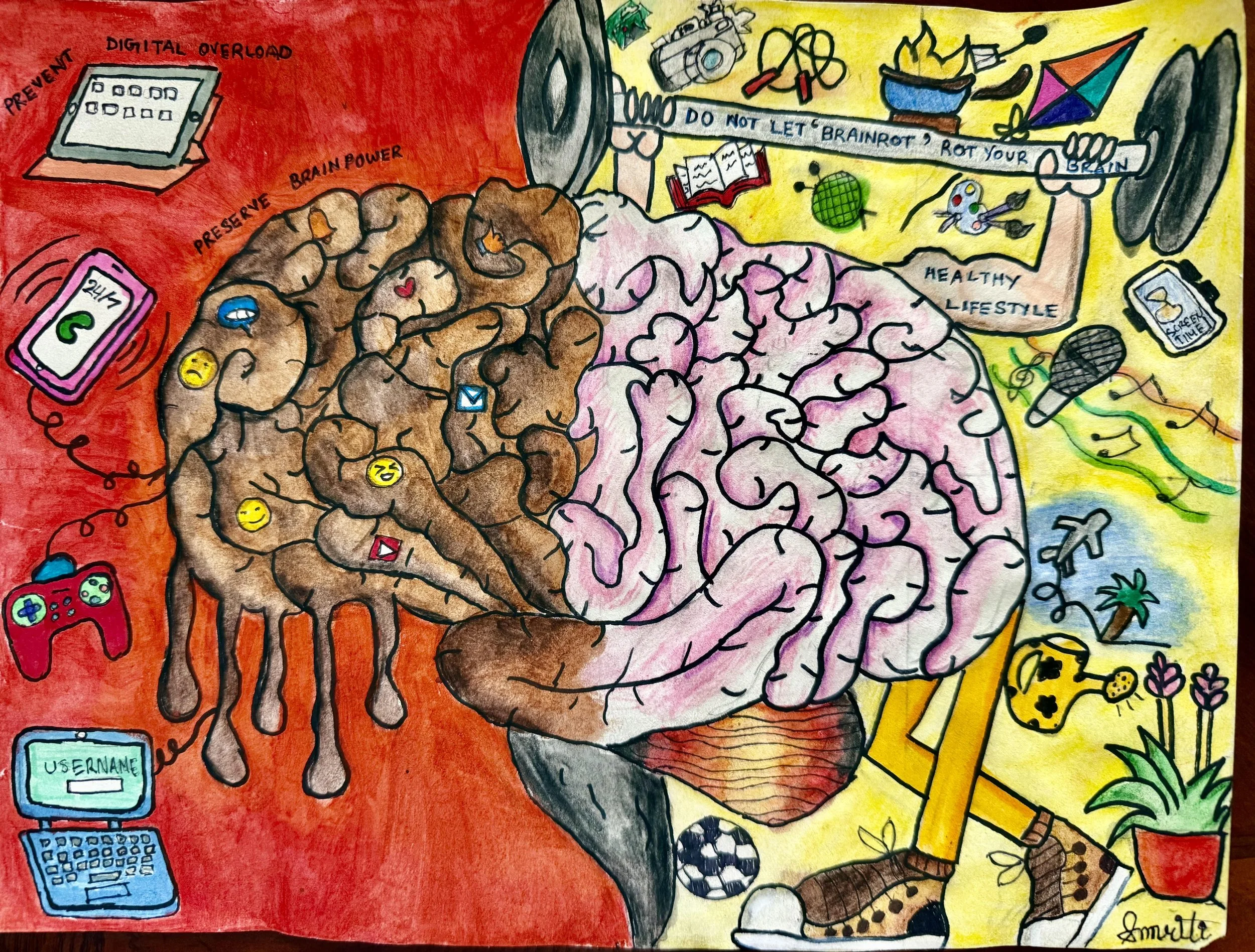
The Stark Contrast!Many children are exposed to electronics at an incredibly early age, which can have harmful effects on them. Most kids spend hours watching and posting videos, although it may seem fun, social media has many negative effects on children such as damaging their mental health and cause sleep deprivation. In order to prevent these negative effects, try to spend some time outdoors or do some activities that don’t involve screens. You could do activities like biking, listening to music, reading a book and so much more. Doing these things wil create a healthy lifestyle, prevent digital overload, and preserve your brain power.Illustration and note by Smriti Vinoth