Atomic Habits
Atomic Habits By James Clear
BOOK REVIEW
Shriya Srinivas
The Atomic Habits is a book focussing on the importance of building small habits to create sustainable habits, thereby creating bigger impacts. The author opens the book with a small analogy of his baseball injury which forced him to evaluate his health and habits. He explains the importance of building small routines which eventually led to improving his health and essentially building a new life from scratch. On the whole, the book stresses on the significance of how the principle of compounding works brilliantly not only in finance, but also in building routines and habits. It is an extremely relevant piece of advice for the current generation, when people expect instance gratification in the race to succeed in life.
The Fundamentals
As the name suggests, in the section, the author elaborates on fundamental concepts such as being 1% better each day. The key to achieving great goals is not in the goal itself, rather in the tiny everyday actions. Our intentional actions, albeit small, when consistently performed builds a strategy and roadmap to the goal. They signal our personal commitment to the goal in not only what we want to achieve but also how we want to achieve it. Moving the focus from goals to the strategy, automates the process. Every action irrespective of scale or impact, when repeated with intention takes us closer to the goal without pressurizing the brain to determine the outcome.
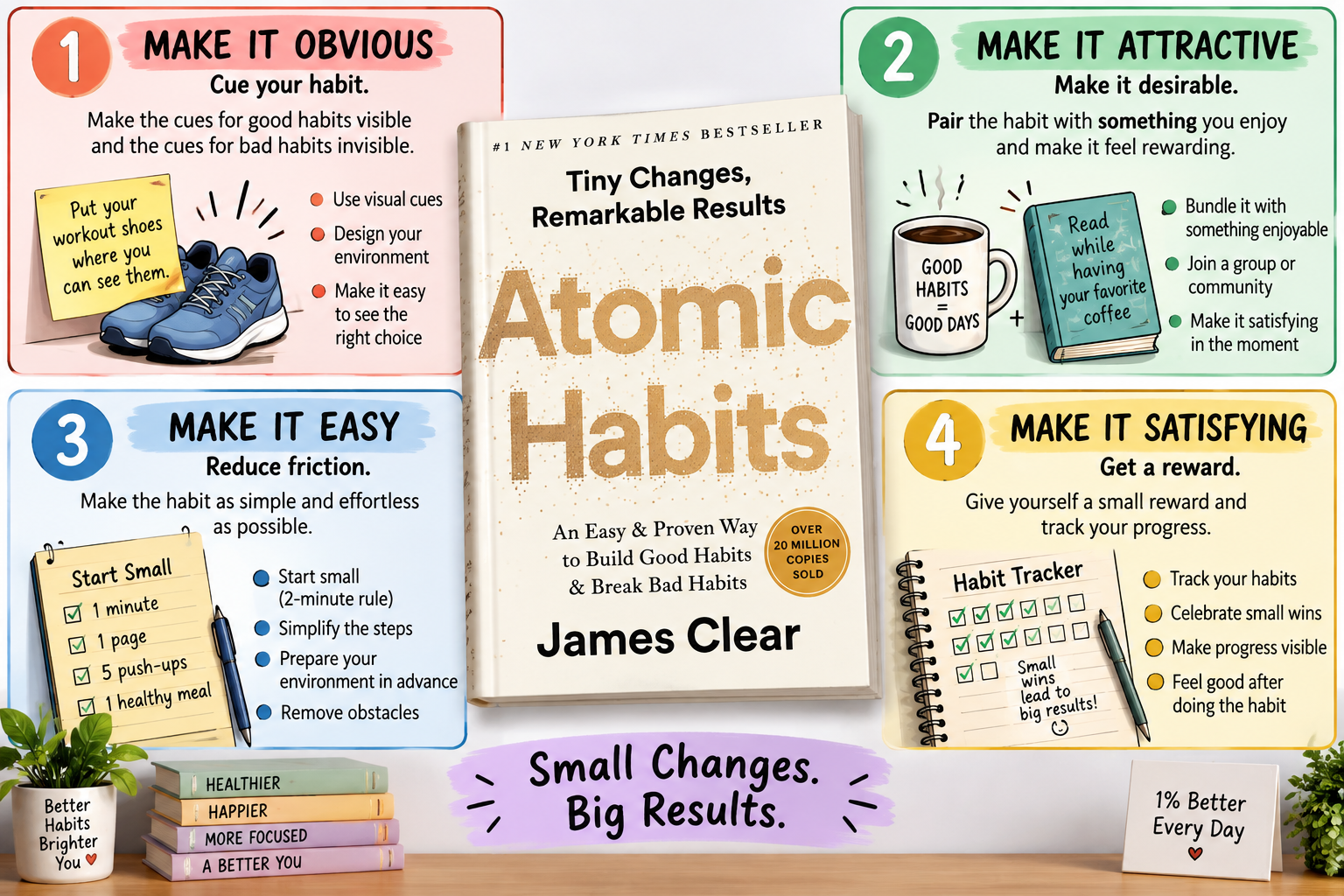
The author also talks about the habit loop - cue, crave, response reward. To build consistent habits, he suggests making them obvious, attractive, making it easy to do and rewarding.
The First Law - Making it Obvious
The author encourages the readers to be aware of our existing behaviors and our current actions that we perform without much thought. He also recommends having a habit scorecard to keep track of all of our habits. To build a healthy routine, it is important to make all actions intentional towards the end goal. Vague plans confuse the brain, while details and specifics help it do things without overthinking. Habit stacking couples multiple actions in a logical sequence. Placing visuals cues that assists take the action and help in consistency. It reminds us of the purpose of our goal. Similarly, removing negative cues establishes an encouraging environment. It avoids temptation and the positive cues reiterate why we want to build healthier habits.
The Second Law - Make it Attractive
For all of us, the reward of our action is what motivates us to put in effort. The author says dopamine and anticipation drive our habits. He introduces the concept of temptation building which refers to pairing a task that needs to be done with something we want. We are after all social beings and are highly influenced by people around us. The author encourages the readers to associate themselves with groups or communities that share the same goals. The more like minded people we attract, the more we stick to our habits.
The Third Law - Make it Easy
Repetition is more important than perfection. Repetitive intention actions done consistently take us closer to our goals. Small acts that make following small habits easier will naturally motivate us to do the task. The author talks about the Two Minute Rule, which is to create a two minute version of any new habit. This informs the brain that the task is easy and doable not only now, but consistently.
The Fourth Law - Make it Satisfying
We all love instant gratification. The catch is, good habits have delayed gratification. The trick is to add an immediate reward that makes the habit enticing. It provides the dopamine needed and naturally makes us inclined to do the same tasks consistently over longer periods of time. He also recommends habit tracking to keep track of consistent patterns. Reviewing our own actions makes good habits feel encouraging and catches any slips earlier in the process.
The Fifth Law - Advanced Tactics
This section talks about the role of genetics and personality traits. All of us have natural strengths and the author suggests choosing habits and strategies that would naturally flow well with our traits. He explains how people end up breaking patterns against better judgement due to boredom and not necessarily failure or lack of discipline. This is where depending on an encouraging community for accountability matters.