The Irreducible Needs of Children
EPIC PARENTING ARTICLE OF THE QUARTER
How Meeting Core Needs Today Helps Your Children Thrive for Life
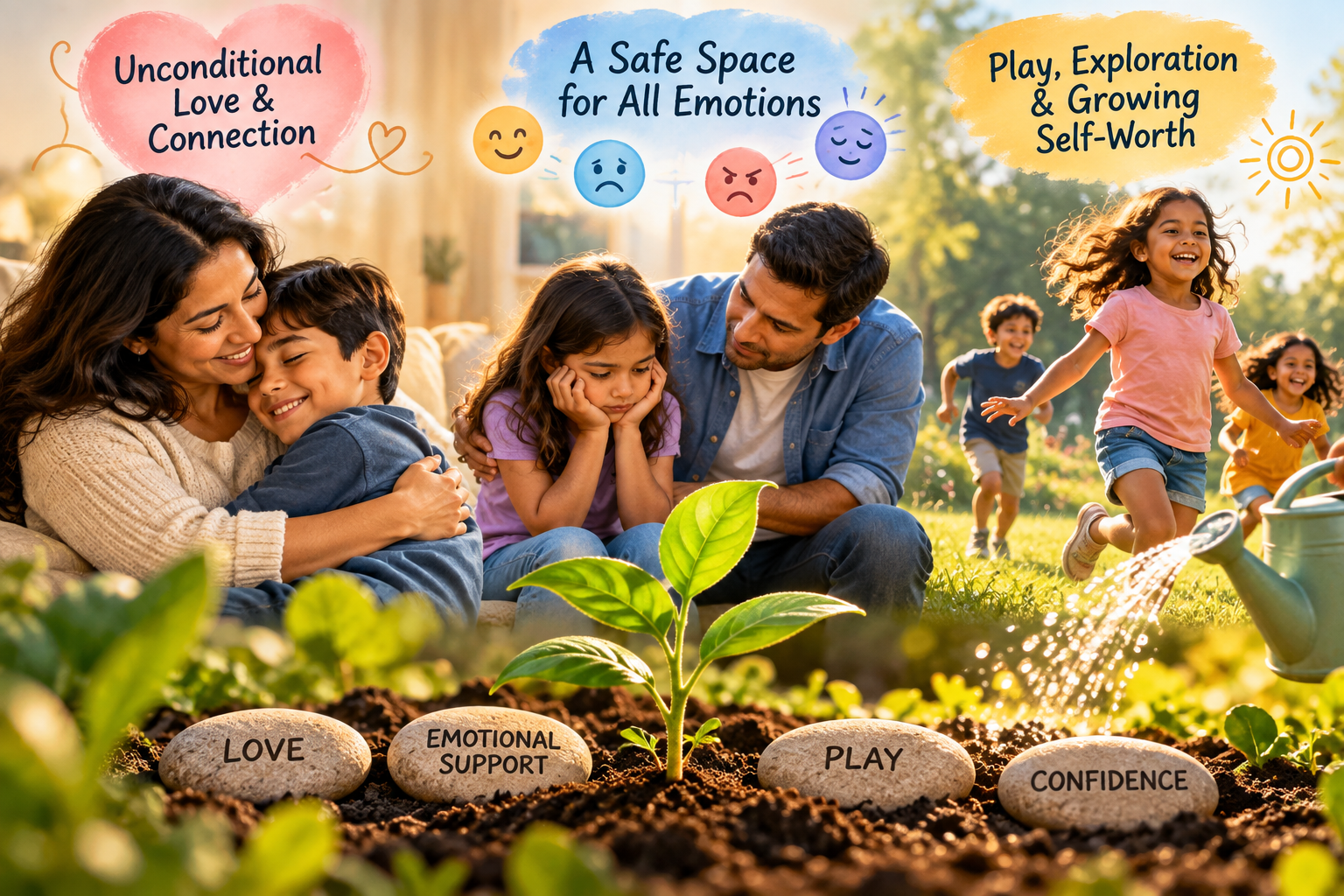
Just like a plant needs sunlight, fresh water, and rich soil to grow, children have fundamental developmental needs that are essential for their healthy flourishing into well-rounded human beings. In developmental psychology, these non-negotiables are known as irreducible developmental needs. When we understand and nurture these core needs, we give our children a strong foundation for lifelong resilience, and overall well-being.
1. Anchor Them with Secure Attachment & Unconditional Love
“At school, I feel like I have to be smart, funny, attractive, or athletic to fit in. At home, I can just be me.”
Children need unconditional loving acceptance from at least one adult in their lives. When we are present for our children with warmth and attunement, children feel seen, safe, soothed, and secure. These 4 S’s form the secure base of attachment that helps children thrive. Children explore the world with confidence when they know they have a steady harbor to return to.
Connection must never be a prize children have to earn through high marks or perfect behavior. Resting in our unconditional acceptance frees their developmental energy to grow.
Ways to meet this need:
• Dedicate time daily: Uninterrupted, device-free one-on-one time builds deep connection.
• Build simple rituals: A predictable bedtime routine or cooking weekend meals together creates emotional safety and belonging.
• Separate worth from achievement: Remind them they are loved for who they are, not what they accomplish.
2. Make Room for Every Emotion
“I was heartbroken when I wasn't invited to the party. My dad didn't tell me to get over it—he just listened while I cried.”
Children need the freedom to experience all feelings—from joy and affection to anger, jealousy, and grief—without risking their bond with us. When we rush to distract or fix (“It’s not a big deal” or “Let’s get ice cream”), children learn that distress is something to fear and suppress.
Sitting quietly alongside a child in pain models emotional regulation and frustration tolerance. They learn that discomfort is natural, temporary, and survivable.
Ways to meet this need:
• Listen and validate before advising: Replace “You’re fine” with “I can see how hard this is for you.”
• Resist the urge to rescue: Offer steady presence while allowing them to sit with frustration.
• Model vulnerability: Let them see that adults experience and navigate complex emotions too.
3. Protect Agenda-Free Play & Build Self-Worth
“Summer camp was fun, but my favorite memory was playing games by the beach with my family.”
In an overscheduled world, unstructured, self-directed play is where genuine brain growth happens. Playing without a scoreboard or end goal allows children to solve problems, take healthy risks, and spark their imagination.
Alongside play, children develop healthy self-worth and self-esteem through how we mirror them back to themselves. As author Pam Leo observed, “The way we treat children is the way they will see themselves.”
Ways to meet this need:
• Leave open gaps in the schedule: Downtime gives room for child-led exploration, outdoor movement and creative exploration.
• Involve them in real contributions: Meaningful household roles, like folding laundry, helping a sibling with school work, or prepping dinner, build capability.
• Praise effort over innate talent: Say, “You tried three strategies to solve that!” rather than “You're so smart.”
Takeaway
“When we meet children’s need for genuine connection, we help them grow into resilient, capable adults who can regulate their emotions, build healthy relationships, and truly thrive.”
Join the Conversation
Nurturing well-rounded children starts with small, daily moments of connection. If this resonated with you, share this article with a fellow parent. To discover practical parenting insights, attend community workshops, and support family well-being, follow Love to Share Foundation America’s parenting initiative:
Instagram: @epicparenting_ltsfa (Effective Parenting in Challenging Times)
Further Reading
1. Leo, Pam. Connection Parenting: Parenting Through Connection Instead of Coercion, Through Love Instead of Fear. Wyatt-MacKenzie Publishing, 2005.
2. Markham, Laura. Peaceful Parent, Happy Kids: How to Stop Yelling and Start Connecting. Tarcher Perigee, 2012.
3. Neufeld, Gordon, and Gabor Maté. Hold On to Your Kids: Why Parents Need to Matter More Than Peers. Ballantine Books, 2005.